|
| |
Yellowstone - Sep. 1996
In the July 4th holiday, we took our first trip after moving to California. This time,
2400 miles in five days and our destination is our longing Yellow Stone National Park.
Yellowstone National Park is home to over 500 hundred geysers. In fact, Yellowstone
contains the majority of the worlds geysers. Yellowstone National Park is America's first
and foremost National Park, drawing over 3,000,000 visitors each year. It encompass 2.2
million acres.
Spectacular geysers, beautiful scenery and abandon wildlife amazed us in many ways.
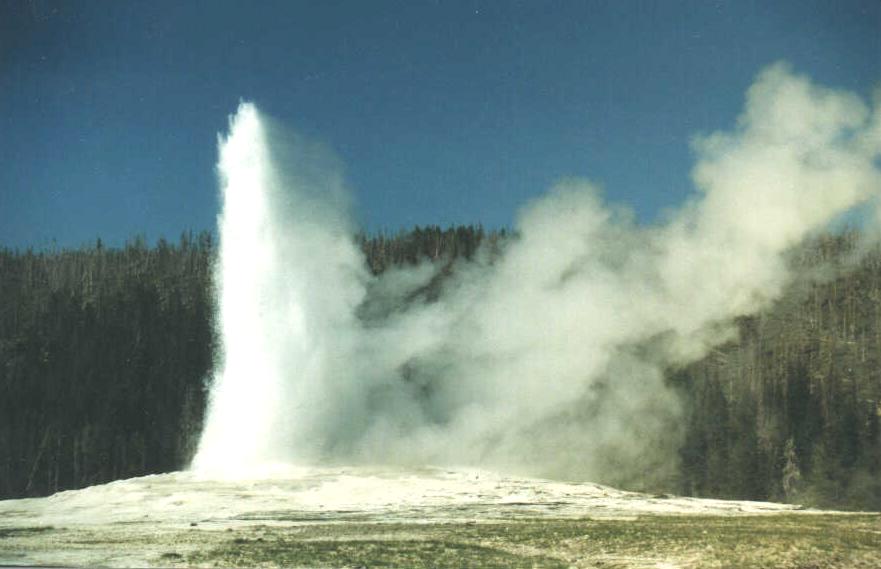 |
Old Faithful is named for its consistent performance.
|
 |
| Old Faithful erupts about every 79 minutes, and last 2-5 minutes. 4-8K
gallons of boiling water reaches a height of 100-180 feet. |
|
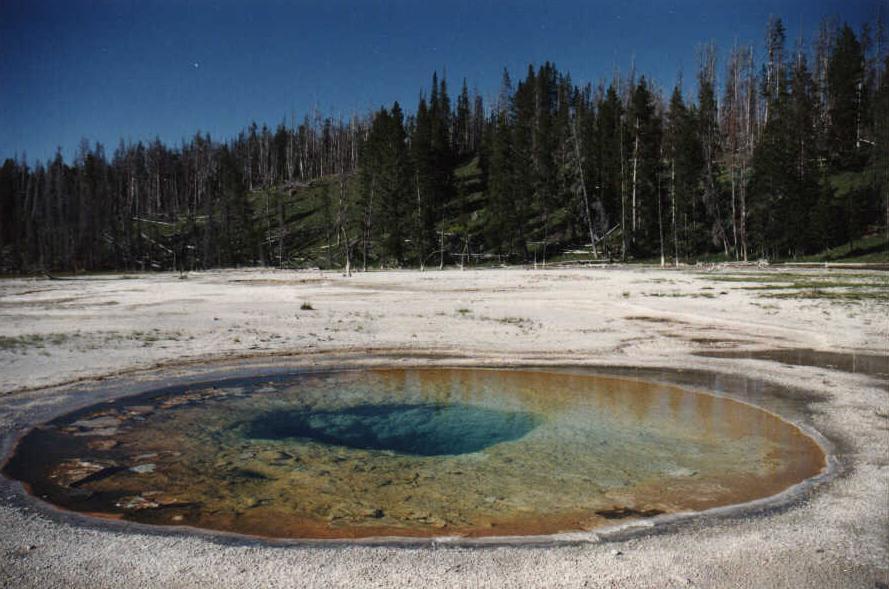
A pool's color is determined primarily by what grows in it.
Brightly-colored algae and bacteria thrive in the hot springs here, and the middle is
reflect blue from the sky. Each color indicates a specific temperature range. |
 |
|
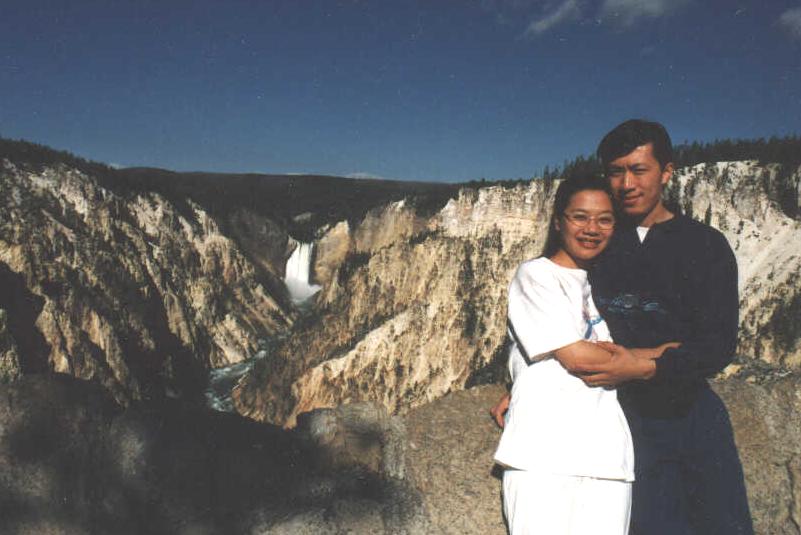 |
| Yellow Stone Fall |
|
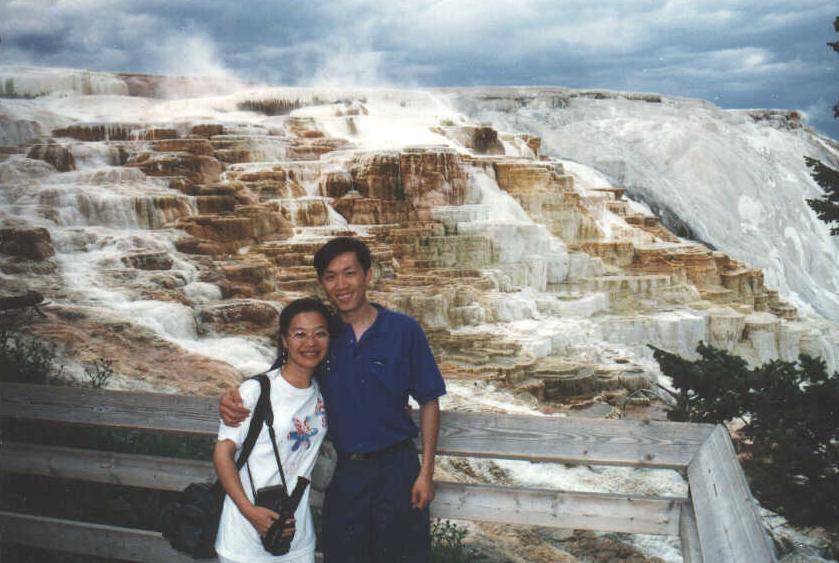
Minerva Terrace |
The four basic types of thermal features present in the park are geysers, hot
springs, fumaroles, and mudpots.
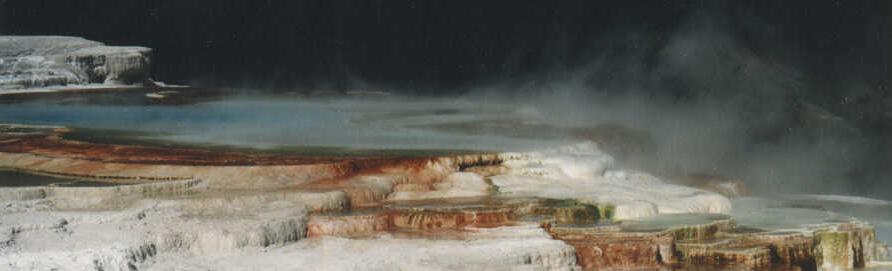 |
Several key ingredients combines to create the Mammoth Hot Springs
Terraces- heat, water, limestone, and a rock fracture system through which the hot water
can reach the earth's surface. |
|
|
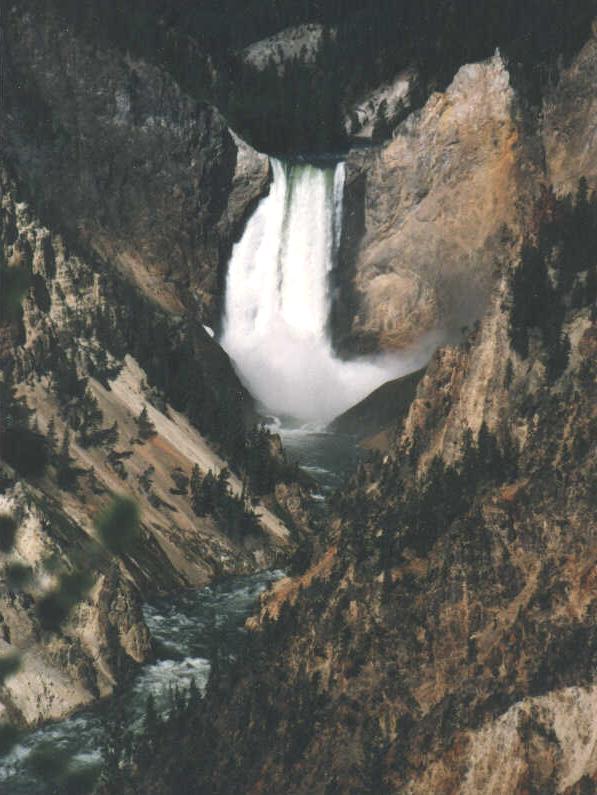 |
Yellowstone is also known for the spectacular Grand Canyon of
the Yellowstone, which is 1200 feet deep and highlighted by the powerful Upper Falls. |
 |
|
|
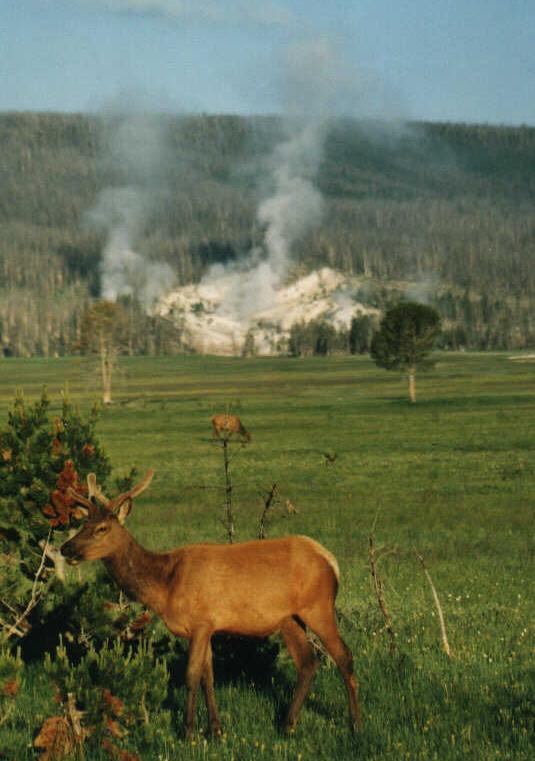
Yellowstone is also pristine mountain-range wilderness and an
open refuge for wildlife, including the grizzly bear, elk, American bison, moose and wolf.
Elk are the most abundant large mammal species in
Yellowstone, numbering about 30,000 individuals during the summer; about 20,000 remain in
the park in winter.
|
For more information click on Yellow Stone
National Park.
|